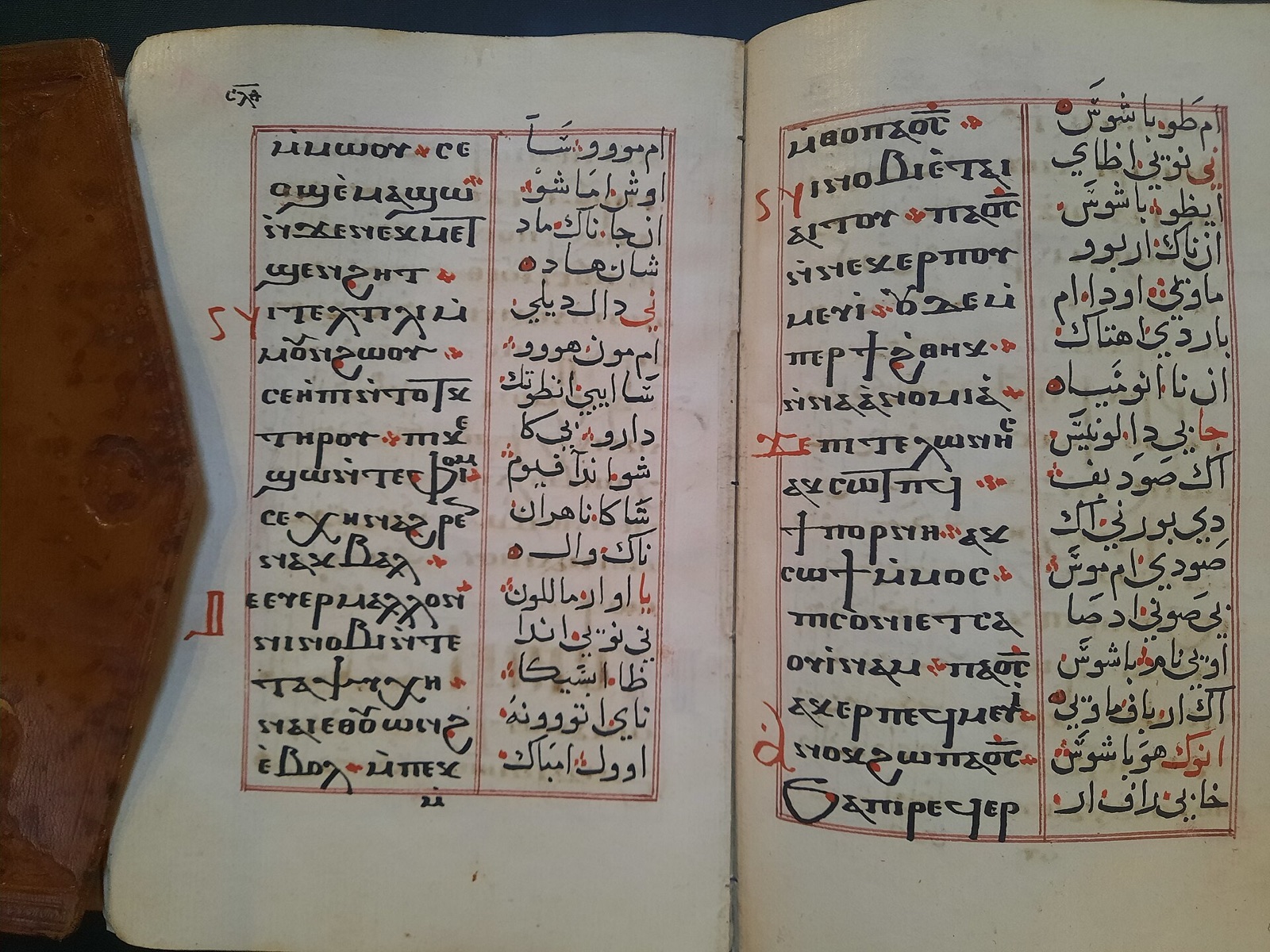
Moving from ancient to Coptic collections should not be described as a single civilizational handover. Museums reveal overlapping languages, materials, religious practices and institutions that change at different speeds.
Reject the blank middle
An itinerary that jumps from pharaonic dynasties to Islamic Cairo can make Greek, Roman and late antique Egypt disappear. Read dates carefully and seek objects that show administrative, linguistic and religious plurality. Period labels are tools, not empty walls between societies.
Follow supports and surfaces
Stone inscriptions, papyri, textiles, wood and manuscript pages allow technical comparison across change. Similar material does not guarantee similar function. A textile can move between clothing, furnishing and burial; writing can shift audience and institution even when the support remains familiar.
Use language as evidence of community
Greek, Coptic and other written forms may coexist with inherited visual traditions. Avoid treating one as a simple replacement. Ask which community, office, liturgy or reader the object served and whether several scripts appear together.
Compare religious space carefully
Temple, church, monastery, tomb and domestic devotional setting organize images differently. An architectural fragment in a museum preserves only part of movement through a building. Scale, attachment and viewing height help reconstruct the missing setting without pretending it can be fully restored.
Track the same form in a new argument
Columns, niches, halos, vegetal ornament and frontal figures may recall earlier visual practices while serving different institutions and beliefs. Resemblance is the beginning of comparison, not proof of unchanged meaning. Check date, location, material and original setting. Then ask which formal feature remained useful and what new relationship it created between image, text, architecture and viewer.
Make domestic evidence part of the transition
Clothing, lamps, vessels, combs and small devotional objects move the discussion beyond official monuments. Their wear, repair and find context can reveal repeated use and household choices. A modest object may cross museum departments because it is at once archaeological evidence, craft and evidence of religious or social life. That category problem is itself worth noticing.
Let the Coptic Museum change ancient categories
Textiles, manuscripts, icons and carved wood bring book culture, lived faith and later urban communities into view. They also challenge a museum habit of treating Egyptian identity as complete at the end of pharaonic rule. Continuity must be demonstrated through objects, not assumed from geography.
Use Old Cairo with respect
The surrounding district extends material and architectural questions, but churches remain active community spaces. Choose one nearby place, confirm access and respect worship and dress. Context is strongest when it does not turn lived religion into a museum extension.
Compare burial evidence without flattening belief
Objects from tombs and cemeteries survive in large numbers, which can make burial appear to define an entire community. Separate what was made for the dead from items reused from daily life, and check whether pieces came from the same excavated context. Changing treatment of bodies, clothing, inscriptions and grave goods can reveal difference, while continuing materials may reflect available skills rather than identical belief. Museum survival is never a complete sample of lived society.
Notice modern collection history
How objects were excavated, transferred, conserved and classified affects what appears continuous today. Read provenance and acquisition information where available. A clean chronological gallery may join evidence that entered museums through very different routes.
Sources reviewed 28 July 2026: Coptic Museum ↗ · NMEC ↗. Displays and visitor conditions may change.