Luxor Museum is most useful when it follows one major site and restores close object scale to a landscape dominated by temples, tombs and long physical routes.
Choose one site as the first layer
Do not arrive after a complete monument marathon. Use Karnak or Luxor Temple as the archaeological anchor, take a real rest and let the museum consolidate one question: relief sequence, royal image, reuse or archaeological group.
Attach objects to findspots
Read labels for temple, bank, cache, burial and excavation. Objects found together preserve relationships that a masterpiece list can erase. Similar pieces placed together in the museum may come from different settings, so separate ancient group from modern comparison.
Read relief as architecture
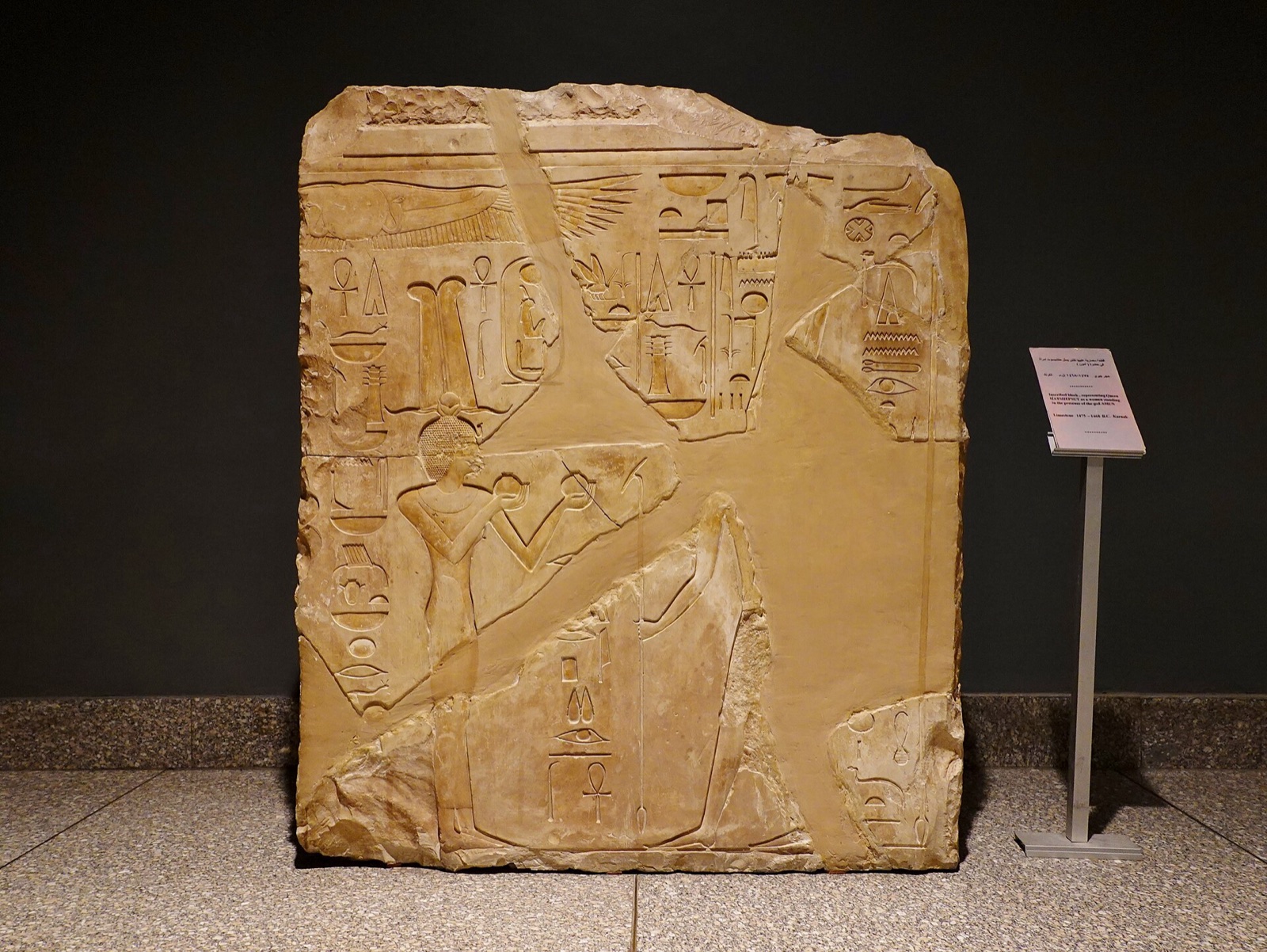
A carved block displayed at eye level was once part of a wall sequence. Look at edge, scale, direction and surviving pigment. Use provenance to imagine neighboring scenes and viewing height. The museum reveals detail while removing architectural movement.
Compare reconstruction and fragment
Reassembled blocks make a sequence visible but contain modern decisions. Notice support materials and gaps. A fragment can preserve tool marks, recutting and reuse more clearly than a complete object. Uncertainty should remain visible.
Compare east bank and west bank evidence
Temple, settlement, tomb and workshop contexts created different routes for objects before excavation. Do not reduce the two banks to a simple life-and-death opposition. Read the exact site and context supplied by the label, then ask how river crossing, procession, administration or burial connected it to the wider Theban landscape. A map and a specific findspot are more reliable than a memorable slogan.
Look for alteration across reigns
Monuments and images could be moved, recut, completed or reattributed. Changes to names, crowns, surfaces and block edges may reveal political succession as well as later building history. Distinguish what the museum label identifies from what you can see yourself. An altered object is not a damaged version of one perfect moment; it may be evidence for several historical claims made in sequence.
Put non-royal labor back beside kingship
Officials, tools, burial objects and building fragments reveal institutions behind royal monuments. Titles can expose administration; joins and stone surfaces expose workshop organization. Choose one modest object that changes how the site is understood.
Build a small archaeological group
Select one object with a secure findspot, a second from the same site and a third that the museum displays for comparison. Write down which relationship is ancient and which was created by curatorial arrangement. Date, material and scale may support the comparison even when contexts differ. This simple group protects against treating every nearby case as an original ensemble and makes the museum's interpretive work part of the visit.
Use the indoor transition deliberately
Heat, bright exterior light and walking affect attention. Rest before the most demanding label sequence. Controlled lighting is an interpretive advantage only when the body is ready to look.
Carry one detail outside again
Select a crown, offering pose, inscription direction or block join to notice at the next site. The museum then becomes a bridge rather than another destination to complete. Confirm current operations through official channels; the Ministry source is a collection note, not a live ticket page.
Sources reviewed 28 July 2026: Luxor Museum collection note ↗. Displays and visitor conditions may change.