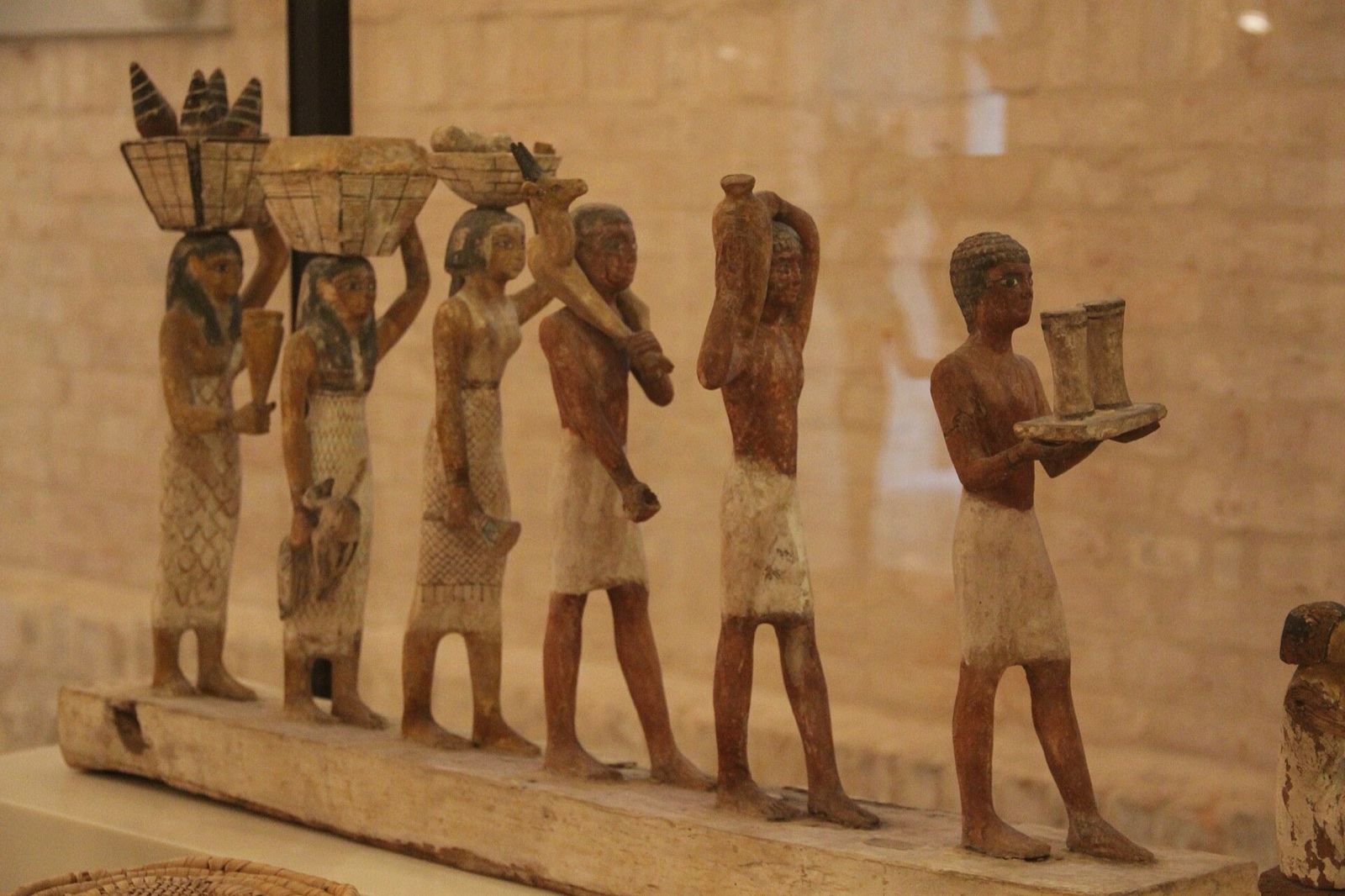
Materials cross political periods, but techniques and meanings do not remain fixed. Following how objects were made connects resources, workshops, trade, repair and conservation while preserving historical difference.
Choose a process, not only a material
“Wood” becomes more informative when you compare carving, joining, pegging and painted preparation. “Textile” opens into spinning, weaving, tapestry work, dye and repair. Define the process you can actually observe so the route does not become a list of labels.
Look for evidence at edges
Seams, breaks, unfinished backs, knots, drill marks, rivets and wall thickness often explain construction better than the decorated face. A fragment can reveal layers and joins concealed in a complete object. Incompleteness is technical evidence, not merely loss.
Recover the supply route
Stone, timber, ore, fuel, fibre, pigment and glass ingredients connect workshops with landscapes and exchange. Avoid assigning a precise quarry or trade route without evidence. Instead, ask which resources, transport and storage had to be organized and whether recycling was practical.
Keep labor specific
Quarry workers, carpenters, weavers, scribes, potters, metalworkers and painters possessed different knowledge. A composite object may require several workshops. Replace the vague phrase “made by artisans” with the technical decision visible in the object: controlling tension, fitting a joint, casting a thin wall or preparing a page.
Reconstruct the order of operations
Try to identify what had to happen first. A surface might be shaped before it was polished, ruled before it was written, or joined before it was painted. Overlapping lines, covered fastenings and unfinished areas help establish sequence. This exercise turns decoration into a chain of decisions and makes collaboration easier to see. When the order remains uncertain, write down two plausible sequences instead of forcing a single workshop story.
Compare repetition with variation
Several similar figures, vessels or pages can reveal templates, molds, standard measurements and practiced gestures. Small differences may reflect hand finishing, repair, material limits or a different workshop rather than error. Look closely at repeated details and then step back to ask why consistency mattered. Standardization can support administration and scale, while variation can preserve the evidence of individual choices.
Compare value across media
Rare material does not automatically equal greater skill. Common clay or fibre can record exceptional control, while brilliance may depend on costly material and simpler shaping. Value can come from scarcity, labor, ownership, ritual role, durability or repeated usefulness.
Read repair as continued history
Ancient patches and replacement elements show that an object remained useful or meaningful. Modern conservation has a different aim and must be distinguished. Both make clear that survival depends on decisions, not only material strength.
Use conservation clues with restraint
Museum mounts, fills and protected surfaces can reveal where an object is weak or incomplete, but they are not a substitute for a conservation report. Look for clearly different modern materials and read any treatment note before deciding what was restored. Lighting and case design also tell you which risks the museum is managing. This final layer connects ancient manufacture with present stewardship without confusing the conservator's intervention with an original feature.
Let display explain vulnerability
Low light, page rotation, flat mounts and sealed cases show how materials respond to exposure. A famous textile may not always be visible. Build a trail around a family of techniques, not one fragile object remembered from an old guide.
Sources reviewed 28 July 2026: GEM collection ↗ · Coptic Museum ↗ · Museum of Islamic Art ↗. Displays and visitor conditions may change.