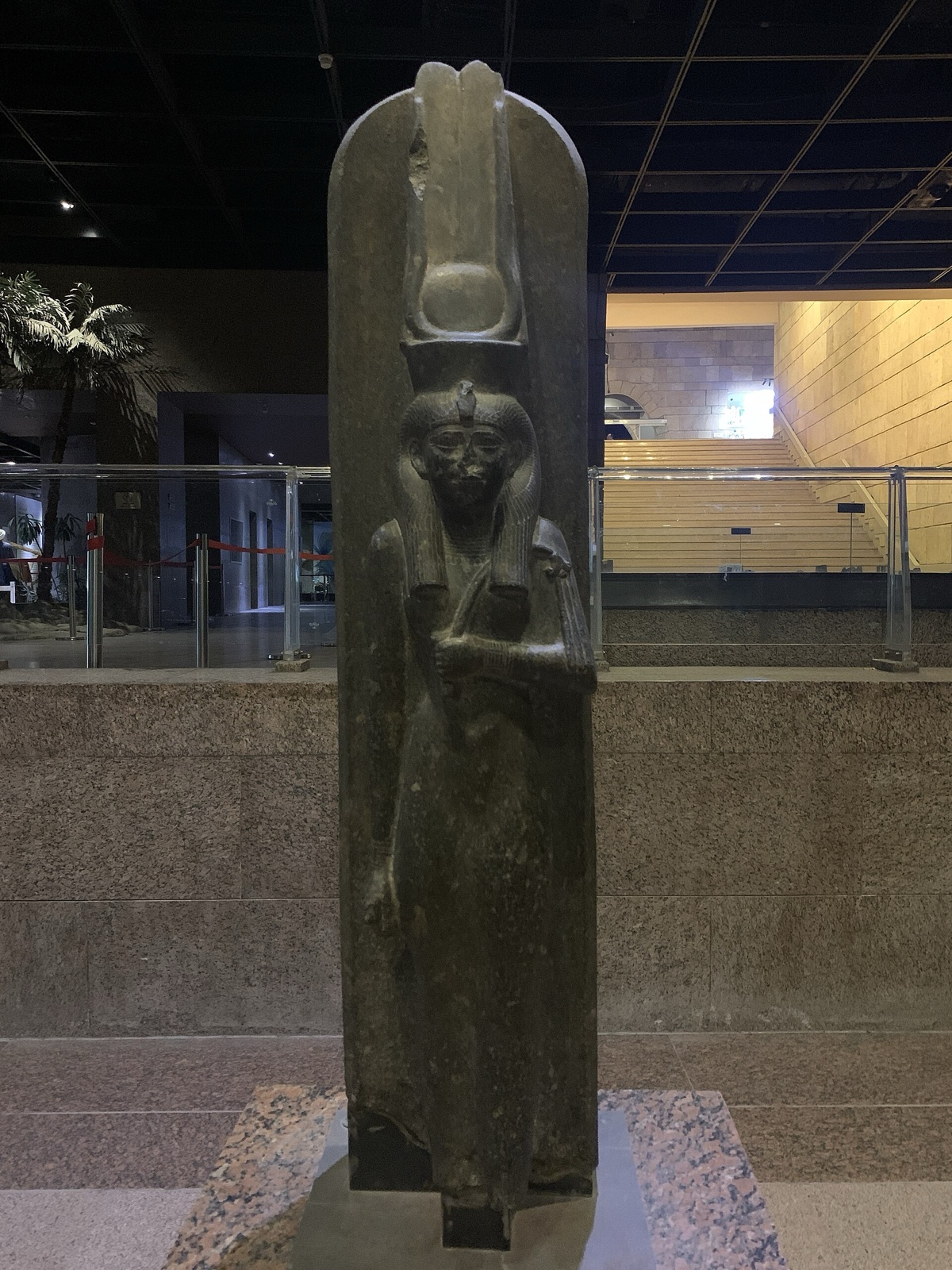
The Nubia Museum changes both chronology and geography. Regional kingdoms, river routes, rescue archaeology, displacement and living communities become central rather than supplementary to a story organized from Cairo.
Begin with the Nile as a regional system
Compare maps before isolated objects. Check orientation, centers, borders and place names. A river map can reveal settlements and routes that disappear when Nubia is shown only at another kingdom's edge.
Give Nubian histories their own centers
Interaction with dynastic Egypt matters, but it is not the only frame. Compare political authority, burial, materials and representation while leaving room for local difference. Similar forms do not prove one-way influence.
Follow the Twenty-Fifth Dynasty carefully
Royal images associated with Nubian rulers connect regions and claims to Egyptian kingship. Read findspot, material, titles and display context before fitting them into a simple foreign-versus-Egyptian story. Political identity and artistic tradition can overlap.
Build chronology from several kinds of evidence
Pottery, burial practice, inscriptions, imported goods and settlement remains do not always divide history at the same point. Notice which evidence supports each gallery date and whether a label uses a broad range. A political transition may be clearer in royal texts than in household objects. Holding several timelines together makes regional change more precise and prevents one dynasty list from controlling every object.
Trace exchange in both directions
Materials, images and technologies moved along the river and across desert routes, but exchange was not automatically one-way or peaceful. Ask where an object was made, found and used, then separate trade, tribute, migration and political control where the evidence allows. Similar forms can express selection and adaptation rather than passive copying. The regional museum frame helps restore that agency.
Hold rescue and displacement together
The international campaign to save monuments is a major history of cooperation. Modern development also displaced Nubian communities and transformed landscapes. Preservation achievement and human loss belong in the same museum account.
Distinguish collection routes
Excavated ancient objects, reconstructed environments and documentation of recent community life enter through different processes. Read whether a label identifies findspot, maker, collector or donor. Each route produces a different kind of museum evidence.
Keep living culture in motion
Language, craft, music and house forms change. Do not read them as timeless survivals. Look for dates and modern voices. Archaeological identity and present community life should remain related without being collapsed.
Read reconstruction as an interpretation
Models and reconstructed settings can restore scale and relationships that isolated objects lose, but every reconstruction selects a date, viewpoint and degree of certainty. Identify which elements are original evidence, modern copies or explanatory additions. Ask whether the scene represents one documented place or combines several examples. A reconstruction is most useful when it sends you back to the labels and objects with a sharper question, not when it is mistaken for an untouched survival.
Connect the museum to rescue geography
If a monument or object was moved during the Nubian rescue campaign, locate both its original and present site. Distance, orientation and neighboring landscape may have changed even when physical fabric survived. UNESCO's Nubian Monuments listing provides the wider preservation frame, while the museum can connect that international story to archaeological documentation and regional experience. Keep relocation, conservation and displacement distinct but visible together.
Use the garden as another layer
Outdoor display changes scale, surface and relationship to terrain. Visit at a physically suitable time and confirm access. Compare what becomes clearer or less protected outside after the indoor sequence.
Sources reviewed 28 July 2026: Nubia Museum ↗ · UNESCO Nubian Monuments ↗. Displays and visitor conditions may change.